Educational philosophy

My approach to decisions, productive failure, technology and purpose-driven learning.

Four guiding ideas

The Mount Beanmore of Educational Non-Negotiables

These ideas shape how I design learning, from the decisions students make to the tools they use. I developed them through my work with students and educators; research I encountered later supports aspects of the approach.

A playful Mount Beanmore illustration with four stone portraits of Brian
The foundation

What I believe about learning

01

Failure is a valuable precursor to success

Failure is not a negative outcome—it is an essential part of the learning process.

Students should have opportunities to attempt difficult work, examine what did not succeed, and try again with a clearer understanding. An early setback becomes useful when students can identify a next step and act on it.

Failure is not something to avoid. It is something to use.
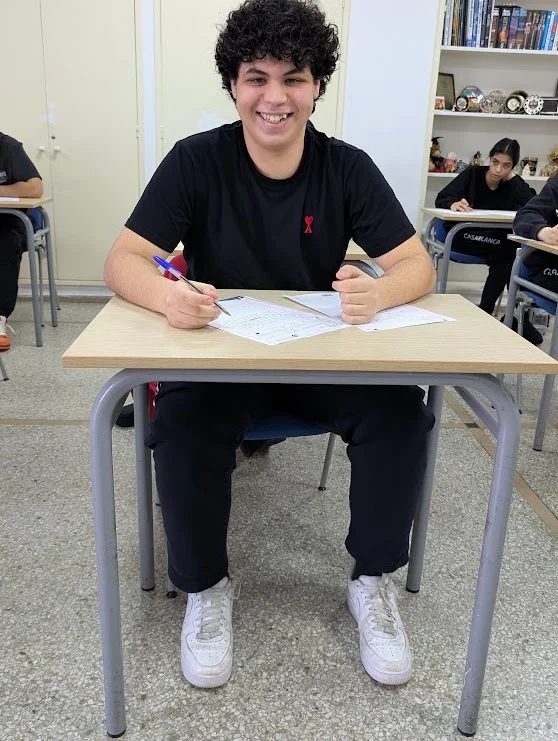
Driss smiling at his desk in class
Driss in class.
A student experience

Driss’s story

Driss, one of my CAS students, struggled on early IB-style assessments. We treated those results as information, identified one area to work on at a time, and kept going. By the end of his first year, he earned a 7 on his Economics final and a high 6 in Business. That progress was his. My part was helping make the setbacks useful instead of letting them define what he could achieve.

02

Learning benefits from real decision-making

Students learn best when they are asked to think, choose, and act meaningfully.

When students have a genuine choice and can see the consequences of a decision, they have more reason to take ownership of the work. Research on autonomy and motivation supports the value of giving learners meaningful agency.

This requires intentional design. A choice matters when students must explain it, respond to its consequences, and apply what they have learned—not simply select between two ways to complete a task.

03

Technology must be leveraged, not feared

Advancements in technology—particularly AI—are a lasting part of the educational landscape. Students need to learn how to use these tools to enhance their thinking, challenge their assumptions, and expand their capabilities.

The goal is to augment thinking, not replace it. That requires learning experiences in which students remain responsible for interpreting, judging, and using what a tool produces.

In my IB classes, I coach students to build subject-specific AI assistants that can generate case studies, practice questions, and feedback on their responses. My aim is to extend their opportunities to practice while keeping judgment and decision-making with the student.

04

The best solutions are synthesized, not selected

No single approach, subject, or educator holds all the answers. Effective teaching requires judgment about the particular students, goals, and circumstances in front of us. Research and experience can each reveal something useful, but neither should become a method applied mechanically in every setting.

One of the first administrators I served under told me, “There is nothing more unequal than the equal treatment of unequals.” That lesson has stayed with me. Students do not all need an identical response; they need us to draw thoughtfully from different methods while remaining clear about the learning we want them to achieve.

The system

The limitations of traditional education

Too often, education prioritizes content over decision-making. The result is students who know facts, terms, and concepts—but may lack the ability to act meaningfully with them.

Schools frequently operate like production systems: students are grouped by age and given a one-size-fits-all experience. At the same time, grades have become the dominant motivator—used as both incentive and threat—gradually eroding students’ natural curiosity and desire to learn.

In high-content programs, like AP and IB, this problem is amplified. These programs emphasize coverage, but coverage alone does not prepare students for success. Content without the ability to think, decide, communicate, and evaluate is ultimately limited in value.

The student

The challenge for students

Students are often driven by short-term performance rather than long-term development.

The pressure to achieve immediate results overshadows the trade-offs they are making. Learning becomes secondary to outcomes, and skill development to grades, rankings, and external validation.

This mindset also contributes to academic dishonesty. When success is narrowly defined and time-constrained, shortcuts become rational. Many students fail to recognize the opportunity costs of these decisions—particularly the long-term impact on their ability to think, adapt, and perform independently.

A clearer purpose

A purpose-driven approach to learning

Education should be purpose-driven and grounded in context.

Every lesson should answer three core questions:

Why does this matter?

What is the utility of this knowledge?

What will students be able to do with it in a new situation?

If the answer is limited to test preparation or graduation requirements, then the purpose is incomplete.

This does not mean every subject must be treated as a future career path. The skills within a discipline—thinking, analysis, communication, and evaluation—matter alongside its content.

Content knowledge matters, but I want students to do more than recall it. I design opportunities for them to apply, explain, adapt, and evaluate what they know in unfamiliar situations. That ability to transfer learning is the destination. Students should understand both the purpose of the work and the capabilities they are developing.

In my classroom

An example of my philosophy in action: AMP Projects

Inspired by Daniel Pink's work on motivation and performance, AMP Projects align learning with three key drivers: autonomy, mastery, and purpose. 

In my classroom, this framework translates into a structured—but flexible—approach that gives students ownership over their learning while maintaining clear expectations for skill development. When assigned an AMP Project, students follow three core components:

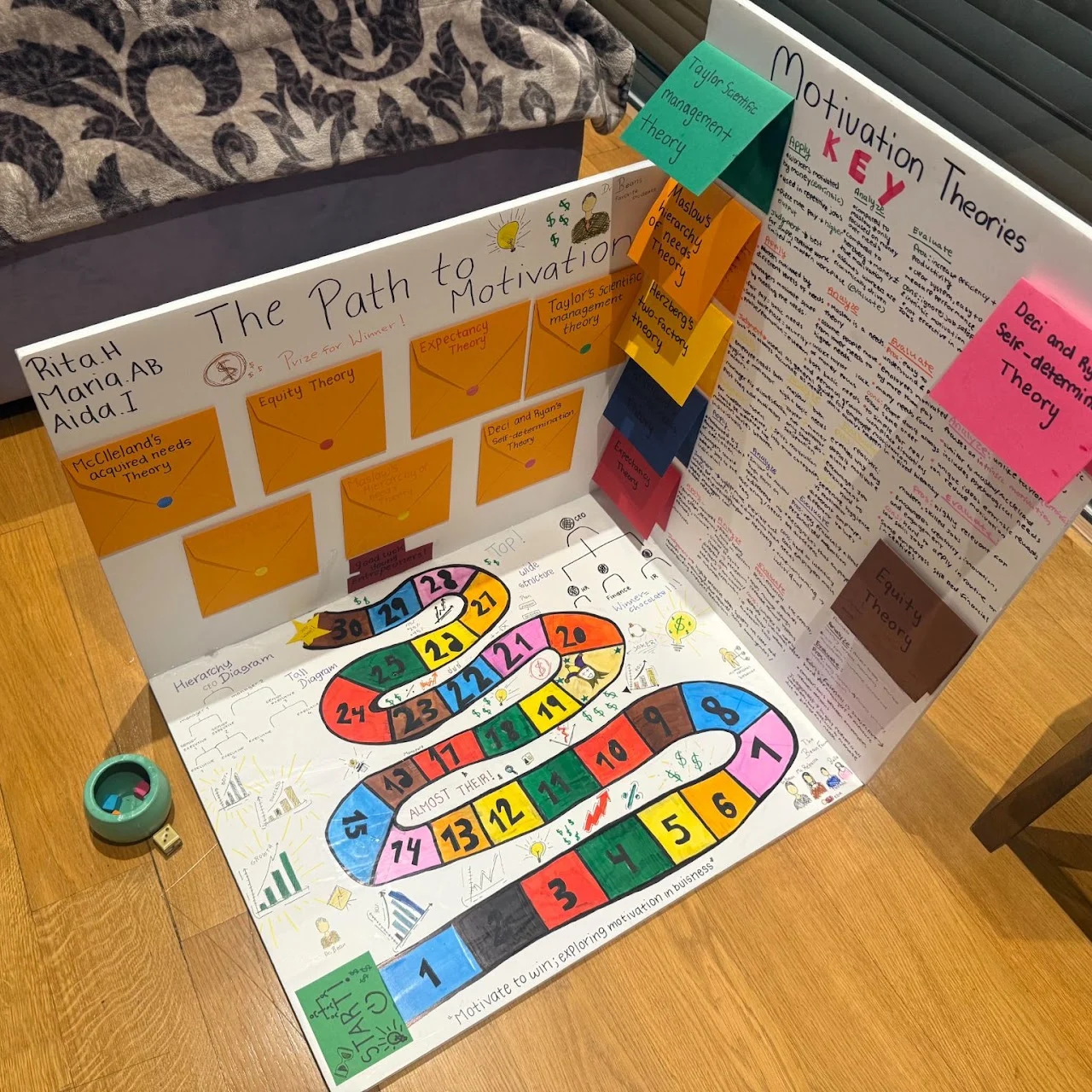
Student-created AMP Project game
A student-created game from an AMP Project on motivation theories.

Autonomy. Students make meaningful decisions about their learning process. They choose:

  • the format of their final deliverable (video, podcast, presentation, essay, simulation, etc.), 

  • whether to work independently or collaboratively, 

  • and how they structure and manage their work. 

This level of choice increases ownership and investment, shifting students from passive participants to active decision-makers.

Mastery. The goal of the project is not completion—it is mastery of both content and skills. Students demonstrate mastery through two components:

  • a project-based deliverable 

  • an individual written assessment 

Performance is evaluated across five consistent metrics:

  1. Application – applying knowledge and skills within a specific context 

  2. Rationale – explaining why that application is effective or appropriate 

  3. Flexibility – adapting the approach in response to change 

  4. Transfer – extending the learning to broader or new contexts 

  5. Recognition – identifying limitations and implications of the approach 

These criteria ensure that learning moves beyond surface understanding into deeper, transferable capability.

Purpose. Students define the project's importance for themselves. At the start of the assignment, they determine how the AMP Project will be weighted within their overall grade (e.g., Major vs. Minor assessment). This requires students to:

  • evaluate their current standing, 

  • consider risk and reward, 

  • and make a strategic decision about their effort and priorities. 

By giving students control over the stakes, the project introduces authentic decision-making and reinforces long-term thinking over short-term compliance.

The work in practice

Explore student work and classroom materials

These projects show how autonomy, mastery, and purpose take different forms.

AMP Project: Short Story

AMP Project: Video

Motivation AMP Project handout provided to the students

Research citation